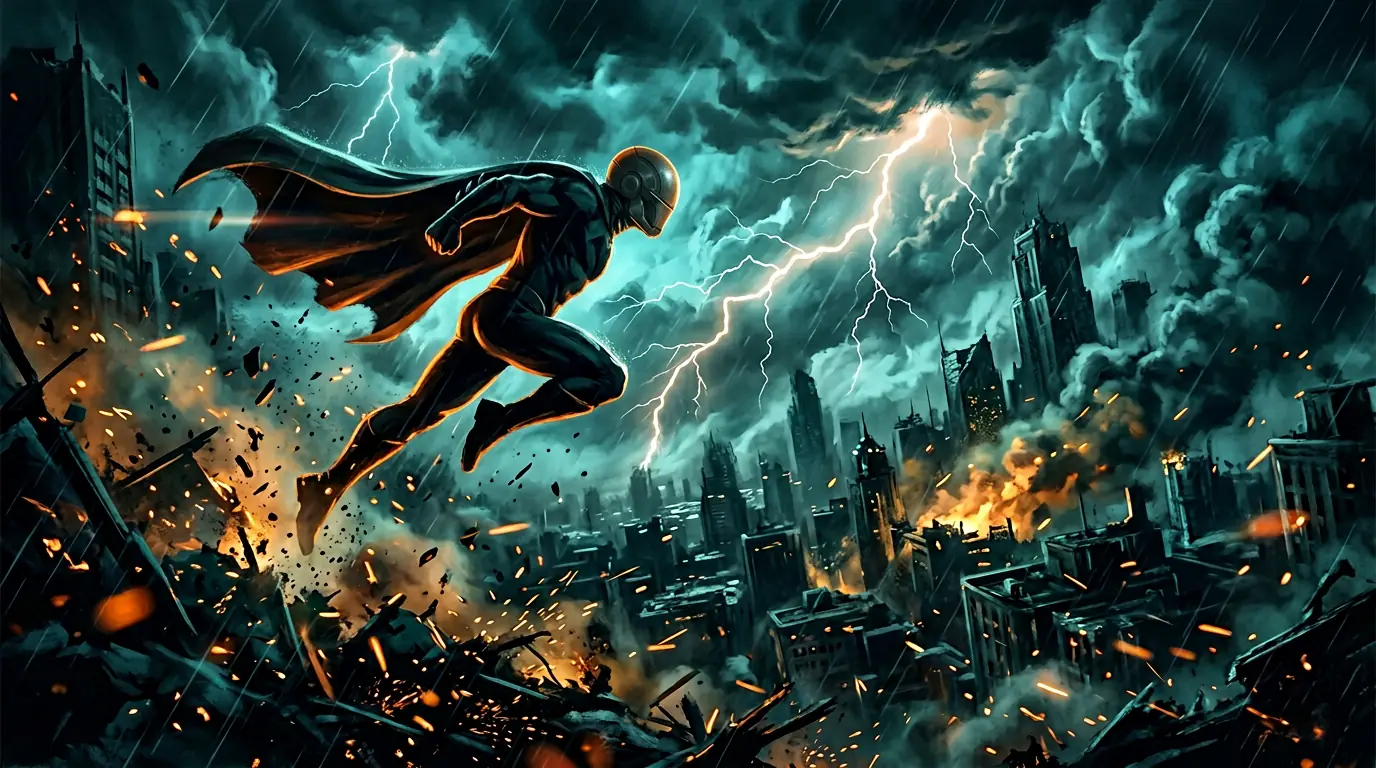
Okay, so Masters of the Universe and Spider-Man: Brand New Day are basically superhero movies with super powers, right?
Alright, gang, pull up a chair, grab your favorite (maybe slightly stale) movie theater popcorn, because we're diving deep into two titans set to hit screens in 2026: Travis Knight's Masters of the Universe and Destin Daniel Cretton's Spider-Man: Brand New Day. On the surface, if you just glanced at the loglines, you might think "Oh, another couple of big action-fantasy flicks, probably chasing the same summer blockbuster dollar." And you wouldn't be entirely wrong! But issame.com, in its infinite wisdom, crunched the numbers and delivered a ~73% similarity index.
My gut reaction to that 73%? It feels… pretty spot on, actually. Not shockingly high, but definitely not low enough to dismiss them as completely different beasts. It suggests a strong core commonality with significant divergence in the details. Like two cousins who grew up in different towns but share the same grandparents and a fondness for pizza. They'll have similar stories, similar values even, but the flavor of their upbringing will be distinct. For movies, that means shared genre territory and character archetypes, but a vastly different execution, emotional landscape, and target demographic. Let's dig into that.
What Each Film Is Doing and Their Audiences
First up, let's talk about Masters of the Universe. Oh, He-Man! The very name conjures up images of muscled heroes, bright colors, and the sheer audacity of 80s fantasy. This new film, with Travis Knight at the helm (who gave us the truly heartwarming Bumblebee and the stunning Kubo and the Two Strings), is a full-blown reboot, an origin story for a new generation. We're looking at Prince Adam, separated from Eternia for 15 years, returning home to find it utterly shattered under Skeletor's skeletal grip. He has to embrace his destiny, wield the Sword of Power, and become He-Man to save his world and his family. The tagline, "Legends aren't born, they're forged," tells you everything you need to know about its aspirational, destiny-driven narrative.
This movie is leaning hard into epic fantasy, sword-and-sorcery tropes, and a classic hero's journey. Keywords like "nostalgia," "alien planet," "based on toy," "warrior," "father son conflict," and "inspirational" paint a clear picture. It's about a young man finding his strength, a clear-cut battle between good and evil, and the epic scale of a fantastical world. Who is this for? Well, obviously, the original fans who grew up with the cartoons and action figures will be there with bells on, ready for a new take. But it's also gunning for anyone who loves grand fantasy adventures, superhero origin stories, and tales of destiny. Think Marvel's Thor with more emphasis on actual swords, or even Dungeons & Dragons: Honor Among Thieves in its broad, adventurous spirit, but with higher stakes given the IP. It’s aiming for that broad, all-ages appeal that revels in heroism and vibrant world-building.
Then we have Spider-Man: Brand New Day. Ah, Peter Parker. Bless his perpetually burdened heart. This is not a reboot; it's a direct continuation, a sequel set firmly within the well-established (and constantly expanding) Marvel Cinematic Universe. Coming off the mind-bending events of No Way Home, this film plunges us deeper into Peter's isolated reality. He's fighting crime full-time as Spider-Man in a world that literally doesn't remember him. His old friends? Moving on without him. This pressure, this profound loneliness, sparks a change in Peter he might not be able to control, just as a new, unseen threat emerges. "A brand new day starts now," says the tagline, but it feels loaded with bittersweet irony.
This Spider-Man film is doing something far more introspective and character-driven than your typical superhero fare, while still delivering the high-octane action. Keywords like "mind control," "new york city," "secret identity," "mutation," "sequel," "transhumanism," and "marvel cinematic universe (mcu)" scream a more complex, serialized narrative. It's about the burden of heroism, the cost of sacrifice, and the relentless evolution of a character who constantly grapples with his identity and responsibilities. Who is this for? Primarily, the legions of MCU fans and Spider-Man devotees who have followed Peter Parker's journey from day one. It caters to those who appreciate superhero stories with deeper emotional stakes, psychological tension, and the ongoing saga of a beloved character. It's less about introducing a hero and more about exploring the consequences of being one, especially one who's lost so much.
So, are they chasing the same audience? Broadly, yes, both are aiming for the "blockbuster superhero/action movie" crowd. But the flavor of that crowd differs significantly. Masters is looking for the "I want to escape into an epic, clear-cut fantasy where good triumphs over evil" audience. Spider-Man is for the "I want to see how my favorite hero deals with profound personal loss and internal struggle while still saving the day" audience. There's overlap, sure, but the core appeal has distinct nuances.
The Key Overlap: Shared DNA of Heroism
Despite their different narrative approaches, the 73% similarity index isn't pulling that number out of thin air. There's a palpable overlap in their cinematic DNA, primarily rooted in the very essence of "superhero" storytelling, even if one wears a loincloth and the other spandex.
Firstly, the explicit signals: both share "Action" and "Science Fiction" as genres. While Masters leans into fantasy, its "alien planet" and advanced tech (even Skeletor's setup) certainly push it into sci-fi territory. Spider-Man, with its genetic mutations and enhanced powers, is undeniably sci-fi action. Then there are the shared keywords: "superhero," "super power," and "aftercreditsstinger." The "superhero" and "super power" bits are obvious — both films feature protagonists who gain extraordinary abilities and use them to fight evil. The "aftercreditsstinger" tells you both are playing the modern blockbuster game, setting up future installments or teasing universe connections, which is a shared language in today's cinematic landscape.
But beyond the labels, the real overlap lies in the universal appeal of the hero's journey. Both Prince Adam and Peter Parker are individuals burdened with immense power and responsibility. They face overwhelming villains – Skeletor, a force of pure evil, and a new, unseen threat for Spidey. Both are fighting not just for themselves, but for their worlds, their families, and the people they love. They represent ideals of courage, perseverance, and sacrifice. The emotional core of both films, despite their stylistic differences, is about a hero embracing their destiny (Adam) or enduring their fate (Peter) to do what's right. They're both about characters who, in the face of overwhelming odds, choose to stand up and fight. That fundamental narrative engine of a protagonist overcoming personal and external challenges through strength of character and extraordinary abilities is what truly binds them.
The Key Difference: Origin vs. Evolution
If the overlap is the heroic journey, the key difference that makes them not interchangeable is the fundamental narrative stage they occupy: one is an origin story and a grand reboot, while the other is a complex evolution within an established, beloved saga.
Masters of the Universe is a genesis. It's about Adam becoming He-Man. It's about discovering his heritage, finding his allies, and literally forging his legend. The stakes are foundational: the establishment of a hero, the re-introduction of a world, and a clear, epic battle to define its future. The conflict is external, with Skeletor representing a tangible, understandable threat to Eternia. The emotional journey, while undoubtedly present in the father-son and father-daughter conflicts mentioned, is largely about embracing destiny and rising to a grand challenge. The "nostalgia" keyword is crucial here; it’s inviting people back to a beloved property, but with a fresh start, a clean slate.
Spider-Man: Brand New Day, conversely, is about evolution and consequence. Peter Parker is already Spider-Man, a seasoned hero with years of experience and a heavy emotional ledger. This film isn't about him becoming Spider-Man, but about what it means to be Spider-Man when the world forgets your sacrifices, and your loved ones move on without you. The conflict is as internal as it is external; Peter's "transformation" and struggle with control suggest a profound personal crisis, possibly a darker turn, or a new phase of his powers that reflects his isolation. The "sequel" and "MCU" keywords signify a reliance on prior knowledge and a continuation of an ongoing narrative, rather than a fresh start. This is not about forging a legend, but grappling with the immense burden of one that has already been forged, and the loneliness that comes with it.
This difference creates vastly distinct emotional landscapes. Masters promises exhilarating discovery and the triumph of good. Spider-Man promises poignant reflection, tough choices, and the ongoing, often painful, saga of a hero's life.
Practical Recommendation: Who Picks Which, and When to Watch Both
Okay, so you're staring at the marquee, trying to decide which epic to dive into. Here’s my two cents:
**Pick Masters of the Universe if: **
- You're craving pure, unadulterated fantasy spectacle.
- You love a classic hero's journey where destiny is fulfilled and good definitively battles evil.
- You have fond memories of He-Man and the Masters of the Universe and want to see a faithful (but fresh) cinematic adaptation.
- You want a big, inspirational story that emphasizes heroism and grand adventure.
- You're in the mood for an "epic beginning" rather than a complex continuation.
**Pick Spider-Man: Brand New Day if: **
- You're deeply invested in the MCU and Peter Parker's ongoing story, especially after No Way Home.
- You enjoy superhero narratives that delve into the psychological costs of heroism, isolation, and identity.
- You're looking for more nuanced character development and emotional depth alongside your action.
- You appreciate a hero who struggles and evolves, rather than simply embraces his power.
- You prefer your superhero action grounded (even if super-powered) in an urban, modern setting.
**Watch Both If: ** Honestly, these two make for a pretty fantastic double feature for a "Hero's Burden" day. Start with Masters of the Universe for the sheer joy of a hero discovering his power and embracing his destiny. It's a fantastic primer on what it means to step up. Then, transition to Spider-Man: Brand New Day to explore the longevity of that burden, the sacrifices required, and the personal cost of being a hero when the world moves on. Together, they offer a comprehensive look at heroism, from its glorious beginning to its challenging, isolated continuation. It's a powerful one-two punch exploring different facets of what it means to be a champion. Plus, they both have after-credits stingers, so you'll get maximum bang for your buck!
FAQ
Is Masters of the Universe connected to any other existing cinematic universe?
As a reboot, Masters of the Universe is designed to be a standalone origin story, launching its own new cinematic universe for Eternia. While there are hints of a broader world and potential for sequels, it is not currently connected to other established franchises like the MCU or DCEU.
Do I need to have seen previous Spider-Man movies to understand Brand New Day?
While the film is a new chapter, it directly follows the events of Spider-Man: No Way Home and continues Peter Parker's journey within the MCU. Familiarity with his previous adventures, especially No Way Home's ending, will provide crucial context for understanding Peter's emotional state and the world around him.
Which film is likely to be more family-friendly?
Masters of the Universe, with its clear good-versus-evil narrative, inspirational tone, and origin story focus, is likely aiming for a broad, family-friendly appeal, echoing the spirit of its 80s animated roots. Spider-Man: Brand New Day, dealing with themes of isolation, loss, and a hero's personal transformation, may delve into more complex emotional territory, potentially making it slightly heavier, though still appropriate for older kids and teens.
TL;DR
- Masters of the Universe is an epic origin story reboot, leaning into classic fantasy and sci-fi tropes, focusing on Prince Adam embracing his destiny as He-Man to save Eternia from Skeletor.
- Spider-Man: Brand New Day is a direct MCU sequel, exploring Peter Parker's isolated life after No Way Home, as he grapples with a world that doesn't remember him and faces a new, unseen threat.
- **Overlap: ** Both are action-packed superhero narratives with protagonists wielding immense power for good, facing powerful villains, and featuring classic hero's journey elements.
- **Difference: ** Masters is a grand genesis, forging a new legend; Spider-Man is a complex evolution, exploring the ongoing, personal burden of an already established hero.
- Watch Masters for an uplifting, grand fantasy epic; watch Spider-Man for a more introspective, character-driven superhero saga. Watch both for a complete exploration of the heroic experience!
This product uses the TMDB API but is not endorsed or certified by TMDB. Editorial disclosure: this comparison was drafted by AI using TMDB data and may contain errors—see Disclaimer.